
Introduction: Beyond the Screen – A Journey to Rediscover Life
In an age saturated with screens, the television often sits at the heart of our homes, a constant source of entertainment, news, and noise. We’ve grown accustomed to its glow, its narratives shaping our evenings and its characters becoming familiar companions.
According to recent data, the average person consumes over three hours of television content daily, a significant portion of their waking lives. But what happens when the screen goes dark? What discoveries await in the quiet moments that follow?
Choosing to turn off the TV is more than just reclaiming a few hours; it’s an intentional act of redirecting your most valuable resources – your time and attention – towards a more deliberate and fulfilling life.
This isn’t about demonising entertainment, but about exploring the profound transformations that occur when we consciously step away from passive consumption and actively engage with the world around us and the world within ourselves. This journey is about rediscovering what truly matters.
The Initial Silence: Navigating the Void and Embracing New Space
The first thing many people notice after turning off the television is the silence. This newfound quiet can feel unsettling, even empty. For years, the background hum of news, sitcoms, and dramas has filled our homes, becoming a constant companion. Without it, the space can feel vast and unnerving, forcing us to confront the thoughts and feelings we might have been using the screen to avoid.
Confronting the Initial Emptiness and the Fear of Missing Out (FOMO)
This initial void is often accompanied by a powerful sense of FOMO (Fear of Missing Out). You might worry about falling behind on popular culture, missing crucial news updates, or being left out of conversations about the latest hit series.
This anxiety is a natural response to breaking a deeply ingrained habit. The constant stream of information and entertainment from television creates a perceived connection to the wider world. When that stream is cut off, it’s easy to feel isolated or disconnected.
The key is to recognise this feeling for what it is: a temporary withdrawal from a stimulant. Rather than rushing to fill the silence with another distraction, allow yourself to sit with it. This is the fertile ground from which new habits and deeper self-awareness can grow. Acknowledge the discomfort, understand that it will pass, and view it as the first step toward a more intentional way of living.
Redeploying Your Most Valuable Resource: Time
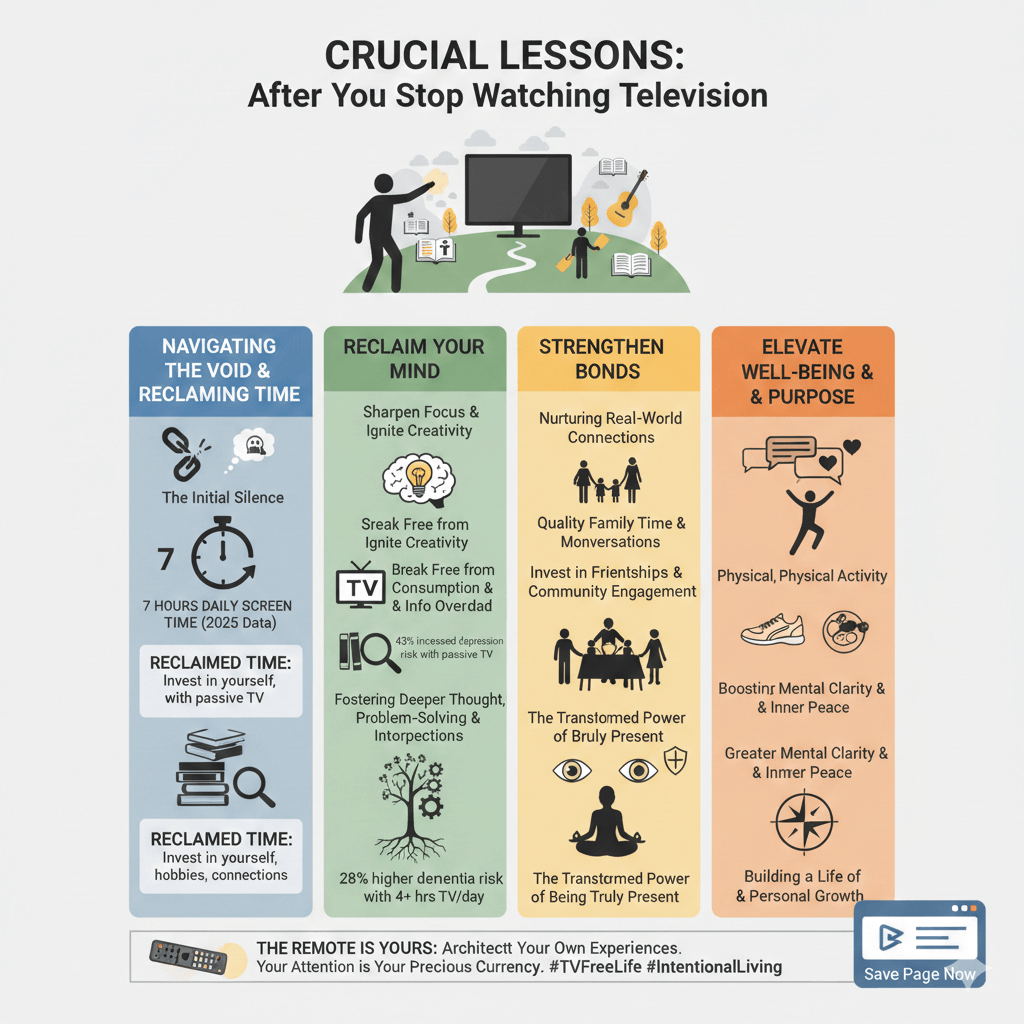
The average person spends a significant portion of their day engaged with screens. A 2025 report from DemandSage noted that daily screen time has climbed to nearly seven hours, with a substantial part dedicated to television.
When you eliminate TV, you are not just creating silence; you are reclaiming a vast expanse of time. Suddenly, you have hours back in your day that were previously allocated to passive consumption. This is your opportunity to be strategic.
Think of this newfound time as a budget you can now invest in yourself. Where will you allocate it? Will you learn a new skill, pick up an old hobby, reconnect with loved ones, or simply enjoy the peace of an unstructured evening?
By viewing this time as a valuable, reclaimed resource, you shift your perspective from loss to gain. You are no longer “missing out” on television; you are opting in to a life with more space for growth, connection, and personal fulfilment.
Reclaiming Your Mind: Sharpening Focus and Igniting Creativity
Constant exposure to television conditions the brain for passive intake. We sit back and let stories, images, and messages wash over us, requiring little mental effort. Turning off the screen is like waking a dormant muscle. It re-engages your cognitive functions, sharpens your focus, and opens the door to a more creative and introspective life.
Breaking Free from Passive Consumption and Information Overload
The nature of television is to deliver pre-packaged narratives and emotions, leaving little room for independent thought. This cycle of passive consumption can be mentally draining and has been linked to negative mental health outcomes.
In fact, studies show that mentally passive activities, such as watching TV, are associated with a 43% increase in the risk of depression. By breaking free from this cycle, you give your mind the space it needs to breathe and function more actively. Instead of being a receptacle for endless content, your mind can become a generator of ideas.
This shift reduces the mental clutter caused by information overload and allows you to focus on what is truly important to you, rather than what a programming schedule dictates.
Cultivating New Interests and Embracing Lifelong Learning
With time and mental energy freed up, the possibilities for personal growth are endless. This is the perfect opportunity to pursue interests you’ve long set aside. You could learn a new language, take up painting, master a musical instrument, or dive into a subject you’ve always been curious about.
The internet, when used intentionally, becomes a powerful tool rather than a distraction. Instead of passively watching a show, you can actively search for a tutorial, read an insightful article, or find a community of like-minded learners.
When you find a particularly useful web page, you can save it for future reference, building a personal library of knowledge. This proactive approach to learning stimulates the brain in ways that television cannot, fostering new neural pathways and keeping your mind sharp and engaged throughout your life.
Fostering Deeper Thought, Problem-Solving, and Introspection
Silence is not emptiness; it is the canvas for profound thought. Without the constant noise of television, you create an environment conducive to introspection and critical thinking. You have more time to process your day, reflect on your goals, and solve problems creatively.
Instead of distracting yourself from challenges, you can confront them with a clear and focused mind. This mental clarity allows for deeper self-awareness, helping you understand your own motivations, fears, and aspirations.
You begin to form your own opinions based on reflection and research rather than absorbing them from media narratives. This internal work is fundamental to personal development and building a life that is authentic to you.
Strengthening Bonds: Nurturing Real-World Connections
One of the most significant and rewarding changes that comes from giving up television is the profound impact it has on your relationships. By removing the screen that so often acts as a barrier, you create genuine opportunities for connection with the people who matter most.
Rediscovering Quality Family Time and Meaningful Conversations
In many households, the television is the centrepiece of the living room, drawing everyone’s attention but preventing real interaction. Family members may sit together for hours, yet remain in their own separate worlds, absorbed by the screen.
When the TV is off, that shared space transforms. It becomes a place for conversation, for playing games, for sharing stories about the day, or for simply enjoying each other’s company. You move from co-existing in the same room to actively engaging with one another.
These moments of connection build stronger family bonds, create lasting memories, and foster a more supportive and communicative home environment.
Investing in Friendships and Community Engagement
The time previously spent on the couch can be reinvested in nurturing your social circle. Instead of watching fictional characters interact, you can call a friend, meet for coffee, or join a local club or organisation.
Building and maintaining friendships requires effort and dedicated time – two things that a TV-free lifestyle provides in abundance. Furthermore, stepping away from the screen often encourages greater community involvement.
Whether it’s volunteering, joining a sports league, or attending local events, you become a more active participant in the world around you, leading to a richer and more interconnected social life.
The Transformed Power of Being Truly Present
Perhaps the greatest gift to your relationships is the enhanced ability to be fully present. Without the constant pull of a plotline or the anticipation of the next episode, you can give your undivided attention to the people you are with.
You listen more deeply, observe more keenly, and engage more authentically. This level of presence is a powerful form of respect and love, and it is something that others can feel. It transforms a simple conversation into a meaningful exchange and a shared activity into a cherished memory.
In a world of endless digital distractions, the ability to be truly present is a rare and valuable skill that strengthens every relationship in your life.
Elevating Well-being: Physical, Mental, and Emotional Health
The decision to stop watching television is not just about freeing up time; it’s a significant investment in your overall health. The sedentary nature of TV viewing, combined with the constant stream of often stressful or stimulating content, can take a toll on your physical, mental, and emotional well-being. Removing this factor from your daily routine can lead to remarkable improvements across all areas of your life.
Boosting Physical Activity and Healthy Habits
The most immediate physical benefit of quitting TV is a reduction in sedentary behaviour. Hours spent on the couch can be replaced with activities that get your body moving, such as walking, cycling, gardening, or joining a gym. This shift has profound health implications.
One study showed a significant association between decreased television viewing and a lower BMI z-score in adolescents, highlighting the direct impact on weight management. For adults, the benefits are just as clear.
Research in BMC Medicine found that reducing TV time to under an hour daily could potentially prevent 11% of coronary heart disease cases. By replacing passive viewing with active living, you are making a powerful choice for your long-term physical health.
Achieving Greater Mental Clarity and Reducing Stress
The constant influx of information, drama, and advertising from television can create a state of perpetual mental stimulation and stress. Your brain is always processing, reacting, and absorbing, leaving little room for quiet contemplation.
Removing this stimulus can lead to a noticeable decrease in anxiety and mental fatigue. Instead of being bombarded by negative news cycles or emotionally manipulative storylines, your mind has the space to rest and reset.
This newfound mental clarity can improve focus, enhance problem-solving skills, and lower the risk of cognitive decline. In fact, a 2023 study found that watching four or more hours of TV per day was associated with a 28% higher risk of dementia.
Finding Inner Peace and Self-Awareness
With the external noise of television silenced, you can finally hear your own inner voice. This quietude is essential for developing self-awareness and emotional intelligence. You become more attuned to your own feelings, needs, and desires.
Activities like meditation, journaling, or simply sitting in quiet reflection become more accessible and appealing. This practice of turning inward fosters a sense of inner peace and resilience. You learn to find contentment within yourself rather than seeking it from external sources of entertainment, leading to a more stable and authentic sense of happiness.
Building a Life of Intentionality: Purpose and Personal Growth
Quitting television is often the catalyst for a much larger shift: the transition from a life of passive reaction to one of conscious creation. When you are no longer filling your free time by default, you are forced to ask yourself a powerful question: What do I truly want to do? This inquiry is the starting point for building a life guided by purpose and intention.
Setting and Achieving Personal Goals with Renewed Energy
With hours of newfound time and a clearer mind, you have the resources to pursue goals that may have once seemed unattainable. Whether it’s writing a book, starting a business, learning a new skill, or training for a marathon, the energy that was once consumed by television can now be channelled into productive and fulfilling projects.
The act of setting and working towards these goals builds self-esteem and provides a deep sense of accomplishment that passive entertainment can never replicate. This is your opportunity to stop watching other people’s stories and start writing your own.
Developing a Stronger Sense of Self and Authentic Purpose
Television often presents a narrow and idealised version of life, shaping our perceptions of success, beauty, and happiness. Stepping away from these prescribed narratives allows you to define your own values and priorities.
You begin to understand what truly brings you joy and fulfilment, independent of societal trends or media influence. This journey of self-discovery leads to a stronger, more authentic sense of self. Your actions become aligned with your core beliefs, and you begin to live a life that is a true reflection of who you are, not who you are told you should be.
This authenticity shines through in your overall demeanour and appearance, projecting a confidence that comes from within.
Investing in Your Future Self: Continuous Learning and Evolution
The commitment to a TV-free life is an investment in your future self. Every book you read, every skill you learn, and every meaningful conversation you have contribute to your personal growth. This process of continuous learning keeps your mind agile and your spirit engaged.
You can actively seek out knowledge from trusted sources, whether it’s through online courses, documentaries you choose to watch with intention, or simply reading a well-researched web page. By choosing to be a lifelong learner, you are ensuring that your future self is wiser, more capable, and more fulfilled than the person you are today.
Practical Strategies for a Thriving TV-Free Lifestyle
Making the leap to a TV-free life can feel daunting, but with a few practical strategies, you can make the transition smooth and rewarding. The key is to replace the old habit with new, intentional activities that align with your goals and values.
Curating Your New Routine: Mindfully Filling the Gaps
The first step is to consciously decide how you will use your newly available time. Create a list of activities you’ve always wanted to do but never had time for. This could include reading, exercising, cooking new recipes, learning an instrument, or starting a creative project.
Plan your evenings and weekends in advance to avoid falling back into old habits out of boredom. It’s not about being busy every second, but about being deliberate with your time. Even scheduling “downtime” for quiet reflection or meditation can be a powerful part of your new routine.
Managing Other Digital Distractions for Holistic Well-being
In today’s world, the television is just one of many screens vying for our attention. To truly reclaim your focus, it’s important to be mindful of your use of smartphones, tablets, and computers as well. Set boundaries for yourself, such as designated “no-screen” times or zones in your home.
Use apps to track your screen time and identify areas where you can cut back. The goal is not to eliminate technology entirely but to use it as a tool that serves you, rather than a master that controls you.
Leveraging Resources for Continued Growth and Inspiration
Your journey doesn’t have to be a solo one. There is a wealth of resources available to support a more intentional lifestyle. Seek out books, podcasts, and blogs that align with your new interests. An inspiring web page can offer more value than hours of passive television.
For example, some workplaces have found that providing access to educational films and content can actually boost morale and productivity. As reported by Employer News, a surprising 98% of businesses stated that introducing TV and film increases employee satisfaction, demonstrating that mindful media consumption can have its place. The key is curating your own content diet.
Documenting Your Journey: Capturing Progress and Insights
Keep a journal to track your progress and reflect on your experiences. Write down the new activities you’ve tried, the books you’ve read, and the insights you’ve gained. This practice of self-reflection will not only solidify your new habits but also serve as a powerful reminder of how far you’ve come.
To truly capture your journey, consider saving articles or resources that you find particularly helpful. You might even create a digital or physical scrapbook of your new adventures. If you find a resource like this article valuable, save it now so you can revisit these strategies and reinforce your commitment to a more present and fulfilling life. Your personal journal can become your most trusted citation on what it means to live well.
The Transformed You: The Appearance of a Life Well-Lived
The changes that occur when you stop watching television are not just internal; they manifest outwardly in ways that are visible to both you and those around you. This transformation is not about a superficial change in appearance, but a fundamental shift in your presence and engagement with the world.
Radiating Authenticity, Engagement, and Inner Vitality
When you are no longer passively absorbing media but actively creating your life, a new kind of energy emerges. You become more engaged in conversations, more curious about the world, and more present in your interactions.
This vitality is palpable. People may notice that you seem more vibrant, more interesting, and more at peace. This is the outward reflection of a mind that is stimulated, a body that is active, and a spirit that is nurtured. Your external appearance begins to mirror your internal state of well-being.
A Life Rich in Experience, Not Just Passive Consumption
Ultimately, a life without television is a life filled with more life. It’s a life measured not in episodes watched, but in skills learned, places explored, books read, and relationships deepened. Your memories are built from your own experiences rather than from fictional storylines. You become the protagonist of your own story, not just a spectator in someone else’s. This shift from consumption to creation builds a rich tapestry of experiences that is uniquely yours, creating a future that is shaped by your choices, not by a programming schedule.
Conclusion: The Remote is Yours – What Will You Choose?
Stepping away from the television is more than just a media diet; it’s a profound act of reclaiming control over your life. It begins with the challenge of facing the initial silence but quickly blossoms into a rediscovery of time, focus, and connection.
By replacing passive consumption with active engagement, you unlock the potential for deeper relationships, improved physical and mental health, and a stronger sense of personal purpose. The hours once lost to the screen become fertile ground for learning, creating, and experiencing the world in a more direct and meaningful way.
The lessons learned are simple yet transformative: your attention is your most precious currency, and where you choose to invest it determines the quality of your life. This journey empowers you to move from being a spectator to being the architect of your own experiences.
The choice is not about abandoning entertainment but about elevating your life beyond it. You hold the remote. The power to change the channel – and your life – is, and always has been, in your hands.